Decoding the Bond Market: Why Rising Yields Matter to You

There’s a financial topic that never gets discussed around the water cooler or at the dinner table. It’s boring and obscure…especially compared to the stock market, or bitcoin, or real estate, or any of a dozen other subjects people do talk about. And yet, it’s arguably more important than any of those. In fact, it plays a critical role in the functioning of our economy.
We’re referring, of course, to the bond market.
The bond market is something that tends to hum along in the background, mostly unnoticed. But every so often, something happens with bonds that makes headlines. Earlier this year, long-term Treasury yields climbed to some of their highest levels in nearly two decades.1
For most people, that last sentence likely has no emotional impact whatsoever. The what on what did what? Treasury yields are one of several indicators investors use to assess where the economy might be headed. While yields have eased somewhat in recent weeks, investors continue to monitor the factors that contributed to the earlier spike. So, we thought it would be a good idea to explain what headlines like this are all about and why the topic matters.
Let’s start by breaking down what we mean by “yield.” To put it simply, a bond’s yield is the return an investor expects to gain until a bond matures.
Yields can be determined by dividing the bond’s annual interest rate payment by its price. For example, imagine an investor, whom we’ll call Alfred, buys a bond with a 10% interest rate for $1000. The bond’s yield would be 10%, too. But now imagine that Alfred sells that bond to Ethyl a year later…but for $75 more than his initial $1000 investment ($1075). Since the bond is being traded for more than its original value, the yield would go down to 9.3%. (After all, if Ethyl pays more than Alfred for the same level of interest rate, she’s getting a lower return on her investment than Alfred did.) However, if Alfred sold the bond for less than he originally paid — say, $975 — then Ethyl’s yield would rise to 10.25%.
Based on this example, we can see that yields and bond prices are inversely related. If a bond’s price goes up, its yield will go down. If the price goes down, the yield goes up. Make sense?
So, that’s yield in a nutshell. Now, you may be wondering, “Why am I hearing so much about bond yields in the media?” Well, many analysts and economists use yields to help assess future interest-rate expectations and broader economic conditions. You see, when interest rates are expected to rise, bond prices tend to go down. (That’s because an existing bond’s interest rate will no longer be as attractive as that of a new bond, meaning the owner would need to sell the bond at a discount.) And when interest rates are expected to fall, bond prices rise. For that reason, when
yields rise across the entire bond market, analysts often see it as a signal that interest rates may rise soon, too.
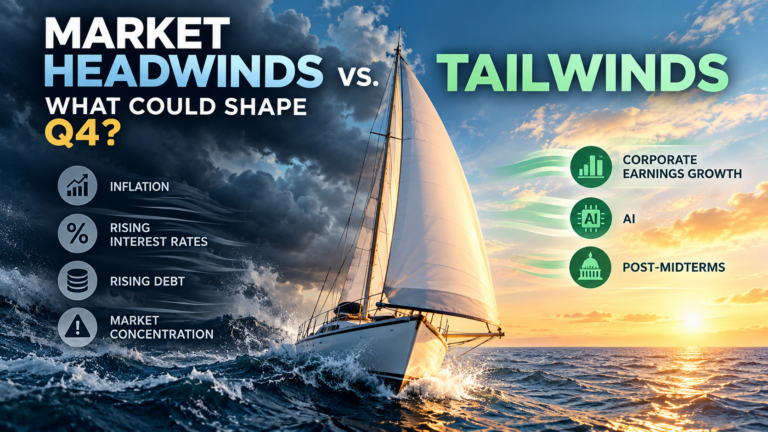
Why have yields been elevated recently? Several factors are contributing. Investors continue to monitor inflation trends, Federal Reserve policy, economic growth expectations, federal borrowing needs, and global demand for U.S. Treasury securities. Changes in any of these factors can influence bond prices and yields.
The Federal Reserve plays an important role in the bond market because its monetary policy decisions can influence interest rates throughout the economy. As a result, investors pay close attention to Fed communications and economic data when assessing the future direction of bond yields.
Now, why does all this matter? Well, Treasury yields are an important bellwether for the overall economy. Because U.S. Treasury securities are generally viewed as among the highest-quality fixed-income investments, investors all over the world buy U.S. Treasury bonds so they can simultaneously secure their money while also earning a return on it. Because of this, many other interest rates and borrowing costs are tied to Treasury bonds. Treasury yields influence many borrowing costs throughout the economy, including consumer loans, business financing, and mortgage rates.
When all these events happen — rising inflation, rising yields, and rising interest rates — it can sometimes affect economic growth. Inflation, obviously, reduces purchasing power, which decreases consumer spending. But higher yields can have a similar effect because companies have to pay higher interest rates to borrow money. At the same time, higher yields can also put pressure on stock valuations. That’s because bonds that yield a higher return can start to look more attractive than stocks, which are historically seen as riskier, more volatile investments.
It’s worth noting that everything in the last two paragraphs is hypothetical. Economic growth has been solid in 2026, and the stock market has reached record highs. But as we move into the second half of the year, it’s worth keeping an eye on Treasury yields and interest rates as a potential “early indicator” for volatility on the horizon.
One important point: Rising yields are not inherently negative for investors. While higher yields can create short-term volatility, they also mean that newly issued bonds may offer higher levels of income than were available in previous years. For long-term investors, that can create opportunities within a diversified portfolio.
While headlines often focus on short-term movements in interest rates and Treasury yields, our investment decisions remain guided by your long-term financial plan rather than day-to-day market fluctuations.
As always, you don’t have to spend much time thinking about any of this. That’s what our team is here for! But whenever you see bond yield headlines in the news, now you know what they’re talking about…and why it matters. In the meantime, if you ever have any questions or concerns, please let us know. We always love to hear from you. Have a great summer!
1 “30-year Treasury yield tops 5.19%, highest since the financial crisis,” CNBC, www.cnbc.com/2026/05/19/treasurys-yields-inflation-traders-fed-interest-rates.html